
The Obfuscation of Intelligence - Part 12
Modernity, Post-Modernity and the Tower of Babel

Photo by Maxim Berg on Unsplash
“If men create intelligent machines, or fantasize about them, it is either because they secretly despair of their own intelligence or because they are in danger of succumbing to the weight of a monstrous and useless intelligence which they seek to exorcize by transferring it to machines, where they can play with it and make fun of it. By entrusting this burdensome intelligence to machines we are released from any responsibility to knowledge, much as entrusting power to politicians allows us to disdain any aspiration of our own to power.
If men dream of machines that are unique, that are endowed with genius, it is because they despair of their own uniqueness, or because they prefer to do without it - to enjoy it by proxy, so to speak, thanks to machines. What such machines offer is the spectacle of thought, and in manipulating them people devote themselves more to the spectacle of thought than to thought itself.
These Men of Artificial Intelligence will traverse their own mental space bound hand and foot to their computers”…
It is not for nothing that they are described as ‘virtual’, for they put thought on hold indefinitely, tying its emergence to the achievement of a complete knowledge. The act of thinking itself is thus put off for ever. Indeed, the question of thought can no more be raised than the question of the freedom of future generations, who will pass through life as we travel through the air, strapped into their seats.
— Jean Baudrillard
“Artificial intelligence is devoid of intelligence because it is devoid of artifice
”…
— Jean Baudrillard
“We live in the complete eclipse of traditional ideals, an eclipse that can make one think it is a “sunset”.Since 1945 a new historical period has begun: that of 𝘩𝘰𝘮𝘰𝘱𝘳𝘰𝘨𝘳𝘦𝘴𝘴𝘪𝘷𝘶𝘴.
But is it a question of “rising ideals”, or of “the obscuration of intelligence”?”…
— Augusto del Noce


[LINK] - The Gentle Singularity
Please read the following as alternative perspectives.
[LINK] - The implausibility of the Intelligence Explosion
[LINK] - Ouroborous - The Snake was eating its own tail
[LINK] - The Hinge Factor - From Descartes to Nietzsche
[LINK] - Inverting the Real - Science’s Metaphysical Crisis
[LINK] - The Cartesian Crisis - Wittgenstein’s Ruler. Semiotic Signs and the Marxist Simulacrum
[LINK] - Materialism, Idealism, Cartesian Dualism and the Crisis in Classical Physics - Ontological Philosophical Errors
[LINK] - The Philosophy of Mechanisation
[LINK] - Simulacra of Being - When the Map became the Territory
[LINK] - Geometries of Unknowing - An Absence of Being
[LINK] - Signs without Substance - Anti-Humanism and the Denial of Being
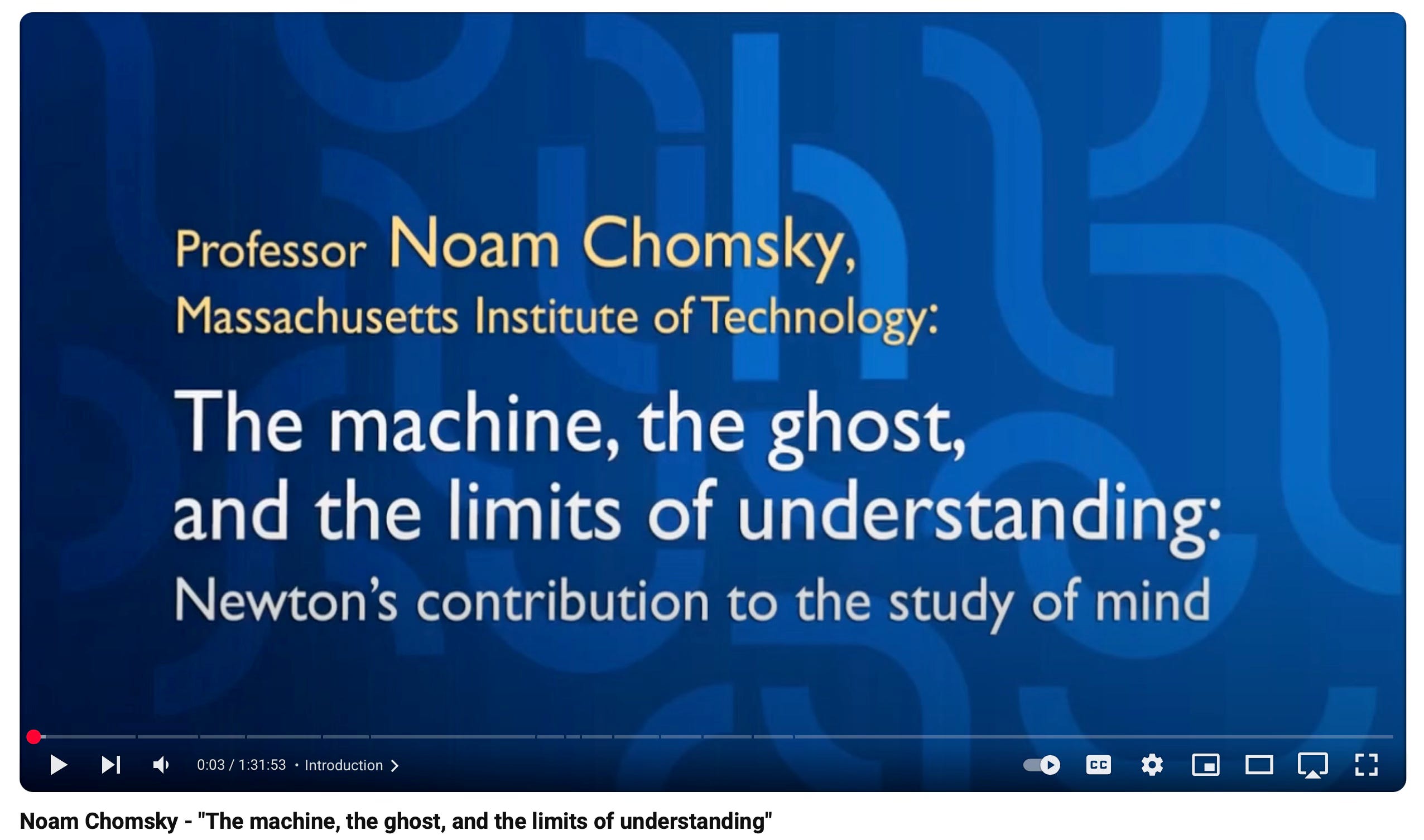
[LINK] - Noam Chomsky - “The machine, the ghost, and the limits of understanding”
[LINK] - The Ghost in the Machine - Intelligence is not Computation
[LINK] - Sense of Coherence - Synthesising Peirce and Antonovsky
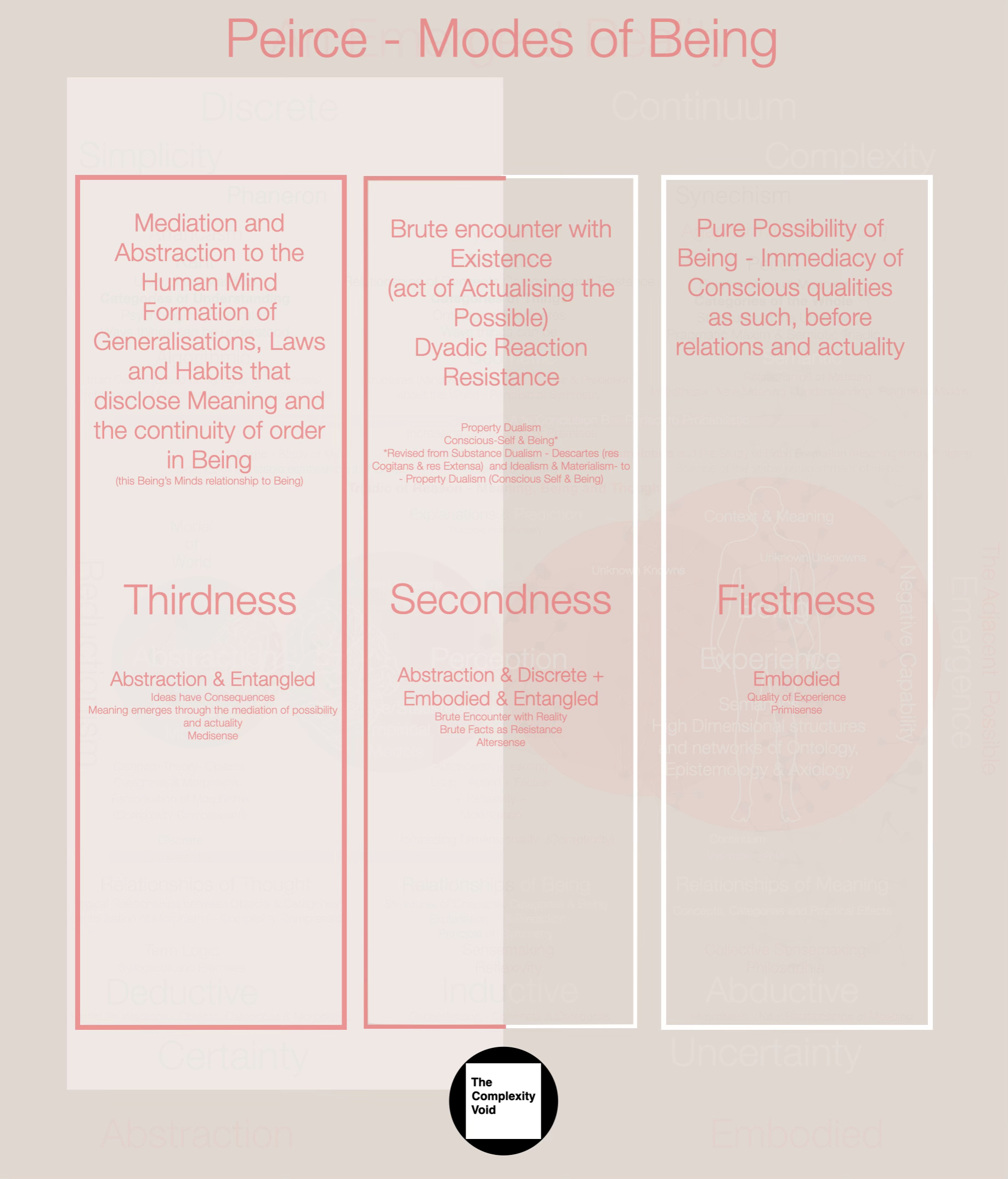
“To be a nominalist consists in the undeveloped state of one’s mind of the apprehension of Thirdness as Thirdness****. The remedy for it consists in allowing ideas of human life to play a greater part in one’s philosophy”…
– Charles Sanders Peirce
****Note - To apprehend Thirdness as Thirdness means to grasp the reality of the whole, the mediating structures that connect signs, minds, and the world. It is the capacity to recognise that meaning, being and knowing are inherently connected. [LINK] Habits, laws, actions and ideas are real and interdependent. Peirce viewed a nominalist as someone whose philosophical mind was insufficiently developed to recognise the actuality of generality of abstraction. Thirdness can be interpreted as the mediation of both an epistemological and ontological mode of Being ( i.e. one of three modes of Being - Firstness, Secondness and Thirdness - Peirce’s Phenomenological Categories that form a Triadic alongside Aristotle’s Ontological Categories and Kant’s Epistemological Categories).
[LINK] - The American Aristotle and greatest thinker
Footnote: