Revisiting Wittgenstein
The Philosophy of Semiotic Boundaries and the Role of Signs

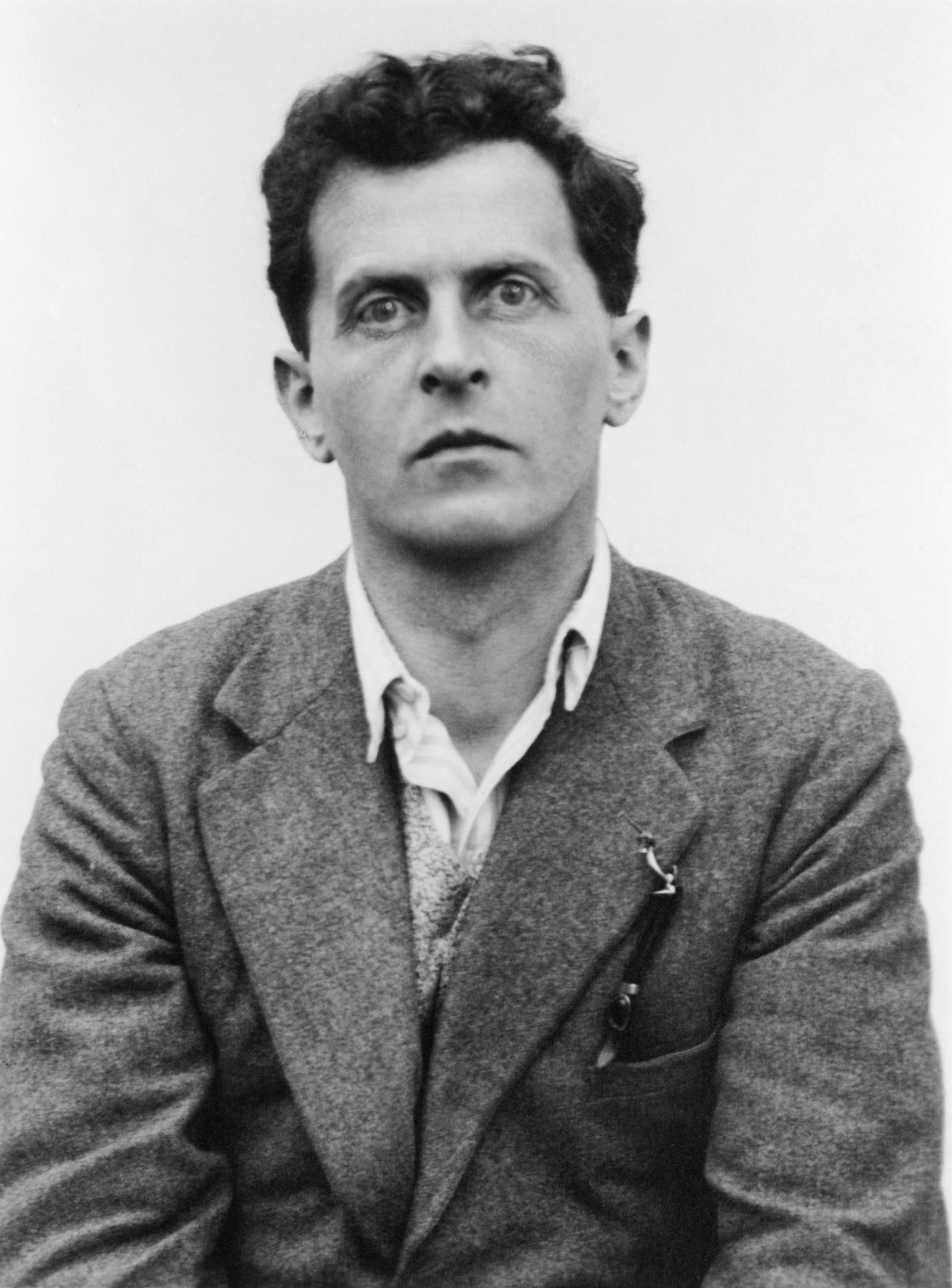
Moritz Nähr, Public domain, via Wikimedia Commons
“The world is independent of my will”…
— Ludwig Wittgenstein
In retrospect, whilst 19th-20th Century Austro-British Philosopher Ludwig Wittgenstein is generally regarded as an Analytical Philosopher (Logic - Study of Thought) his life’s work could be viewed through a more fundamental lens.
Semiotics and the Study of Meaning mediated via Signs.
His early work explored the role of language (i.e. signs) as a logical metaphysical representation of Reality that influenced the emergence of logical positivism.
His later work explored the social, interpretative, relational and pragmatic use of language (i.e. signs).
“Philosophy is not a theory but an activity”…
— Ludwig Wittgenstein
A philosophical contemplation that implicitly builds upon the :
ideas of Ferdinand de Saussure’s European Structuralist Semiotics; and
ideas of Charles Sanders Peirce and his Semiotic Triadic & Pragmatic Maxim.
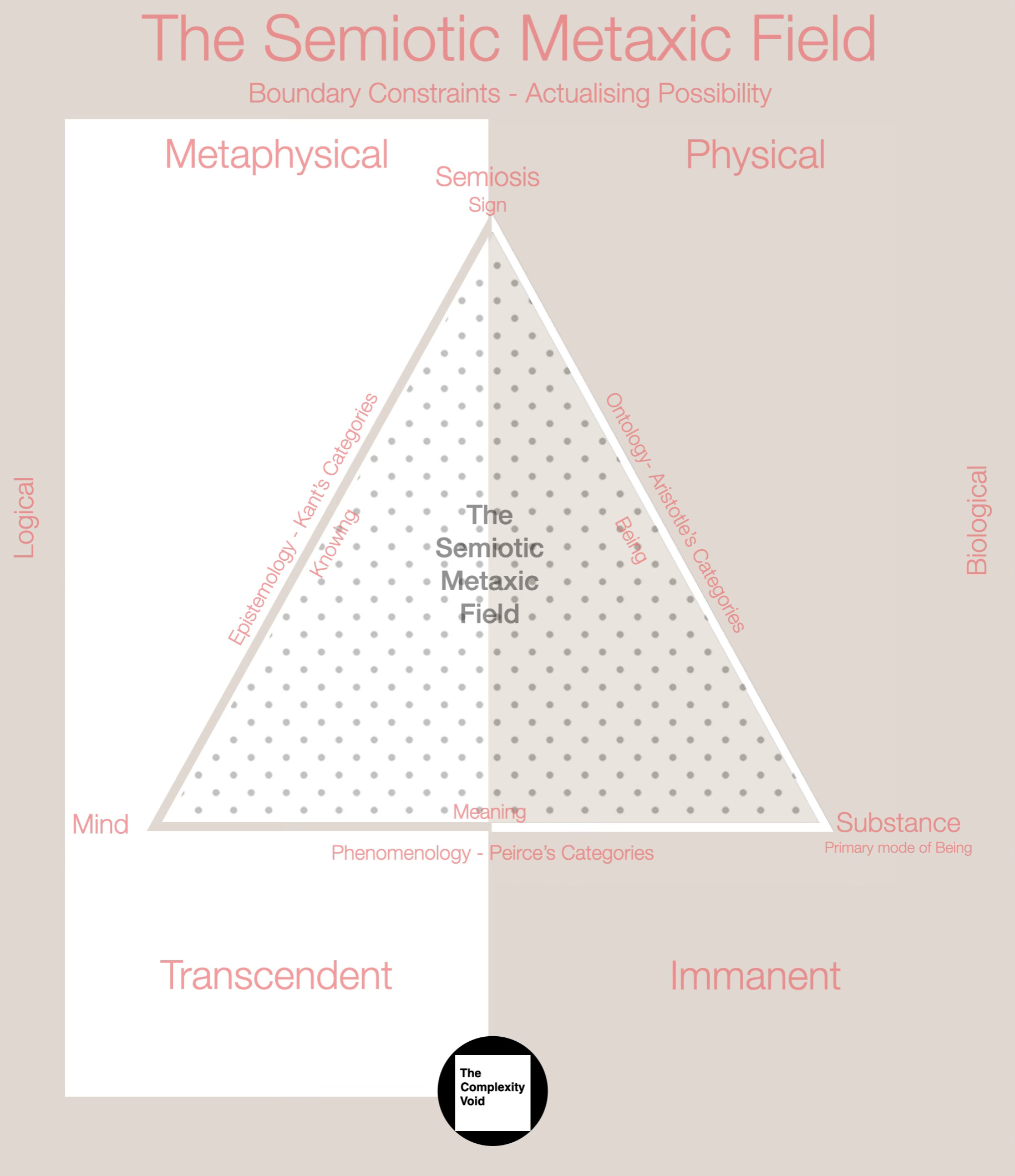
The Semiotic Metaxic Field - Intelligent Contingent Being: Categories as Boundary Constraints explored the role of Aristotle’s Ontological, Kant’s Epistemological and Peirce Phenomenological categories that establish boundary constraints to Human’s understanding of the infinite horizon of the possibility of Reality grounded in Being.
A-priori constraints to the intelligibility of the Universe and our capacity for good reason.
“The limits of my language mean the limits of my world”…
— Ludwig Wittgenstein - Tractatus Logico-philosophicus
Similarly, Wittgenstein’s philosophical inquiry explores the boundary constraints of language (i.e. semiotic signs) and meaning.
Nassim Taleb captures the essence of this philosophical inquiry in his phrase Wittgenstein’s Ruler.
“Wittgenstein’s ruler: Unless you have confidence in the ruler’s reliability, if you use a ruler to measure a table you may also be using the table to measure the ruler”…
— Nassim Nicholas Taleb
Does the Ruler (i.e. the Semiotic Sign - akin to Language - Representamen - Signifier) measure (i.e. Interpretant - Signified) the Table (i.e. the Object - Referent)?
Or does the Table (i.e. the Object - Referent) measure (i.e. Interpretant - Signified) the Ruler (i.e. the Semiotic Sign - akin to Language - Representamen - Signifier)?
In other words, he is exploring:
the relationship between the Object (Observed), Representation (Sign) and Interpretation (Observer);
the relationship between Ontology, Epistemology and Phenomenology;
the relationship between Being, Knowing and Meaning;
the relationship between the Primacy of Human Consciousness and Primacy of Existence; and
the relationship between the Contingent Being of Man and the Necessary Being of God anchored in the Univocity of Being and Universality of Reason.
Do truth claims and understanding emerge from the Conscious Self?
Do truth claims emerge from Existence (the act of Being)?
Do truth claims emerge from the symbiotic relationship of this Being (Dasein) to Being (Sein) - Heidegger? An intentional consciousness (Husserl) and the relationship between the Observer, Sign and Observed (Peirce)?
A recognition that intelligence and our sense of coherence are anchored in a Metaphysical Geometric Unity mediated through signs.
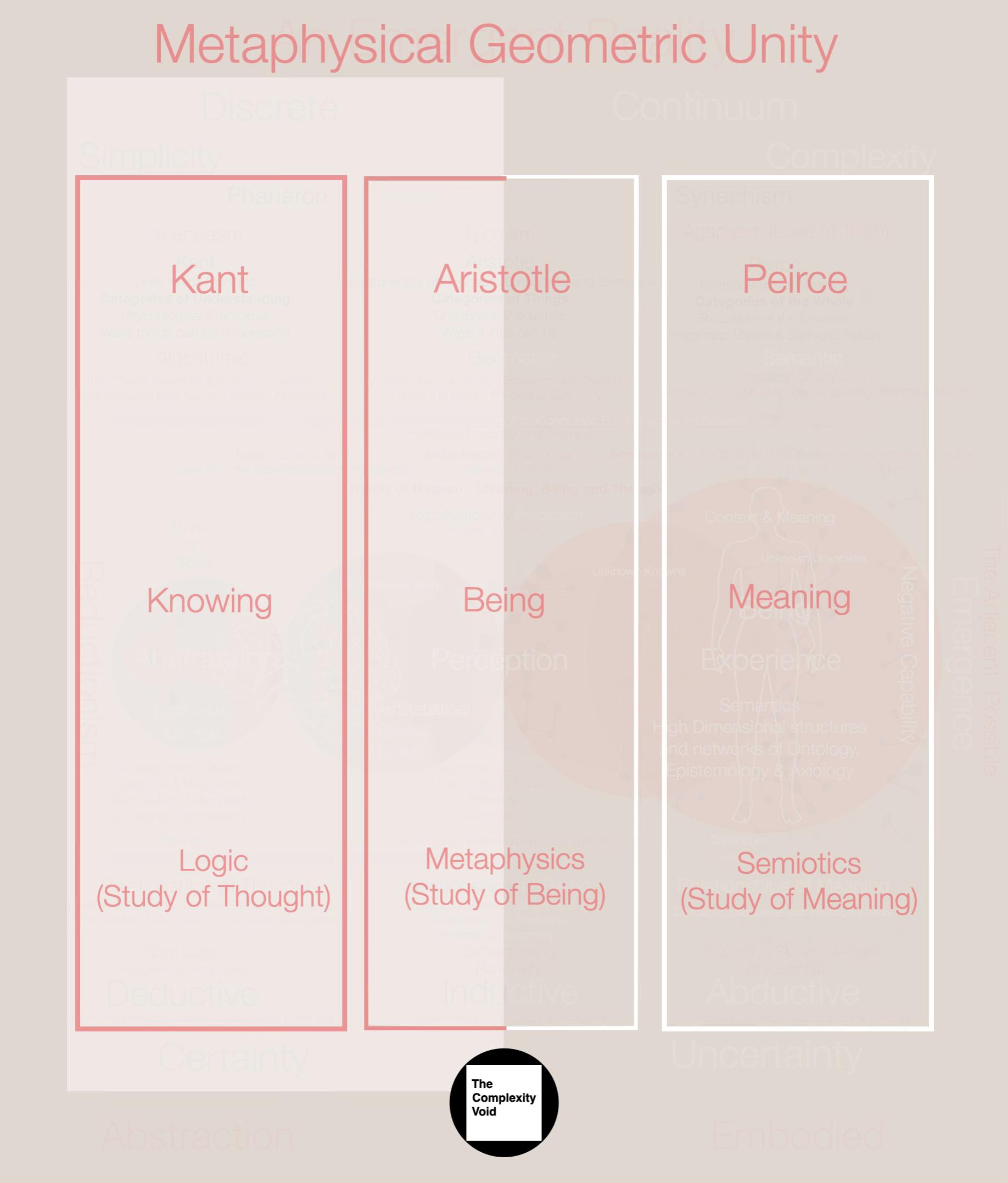
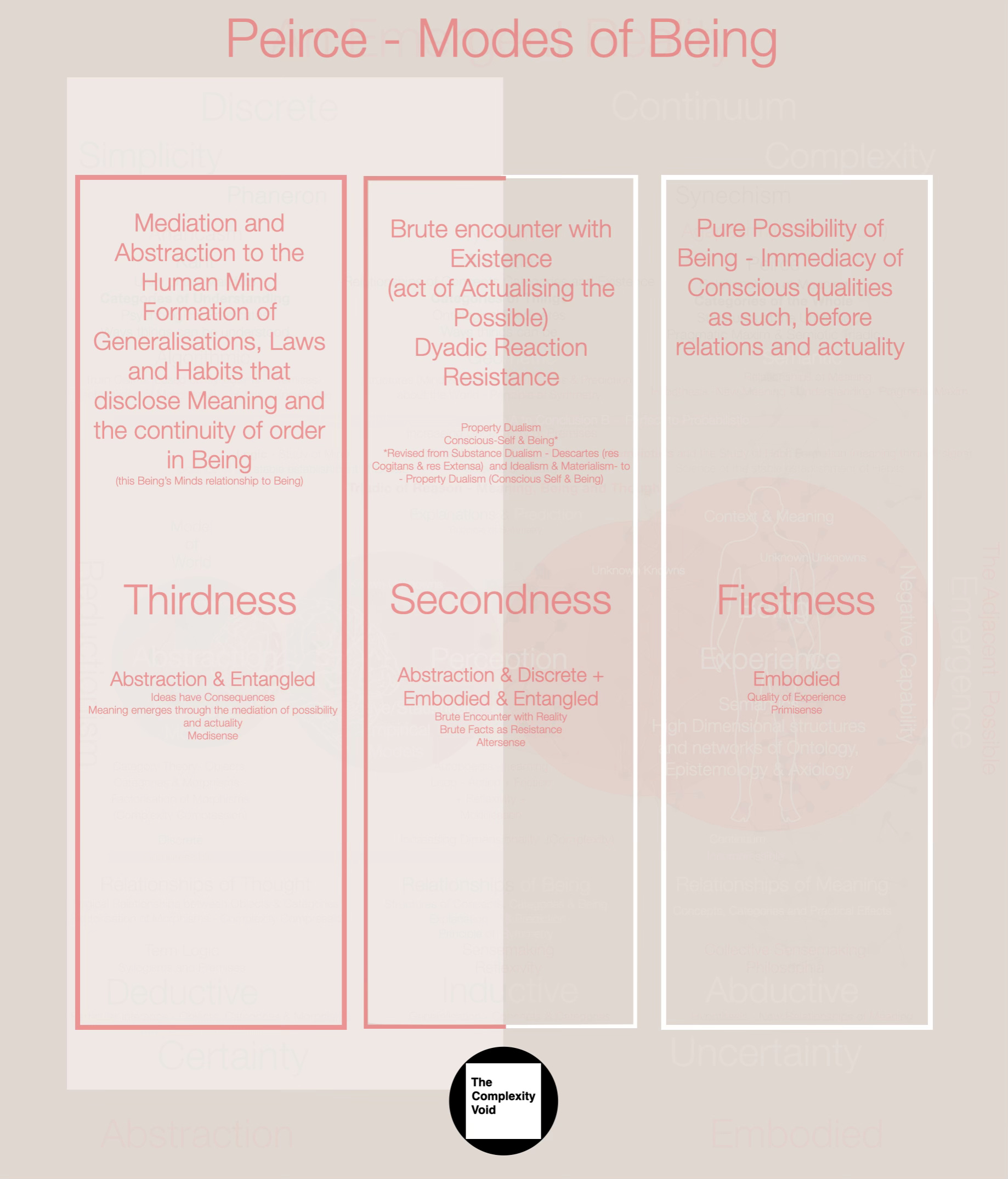
A recognition that intelligence, our understanding of Reality and our Agency are anchored in mediating three modes of Being (Peirce).
Real Being, Ideal Being and Moral Being (Rosmini).